Design Process
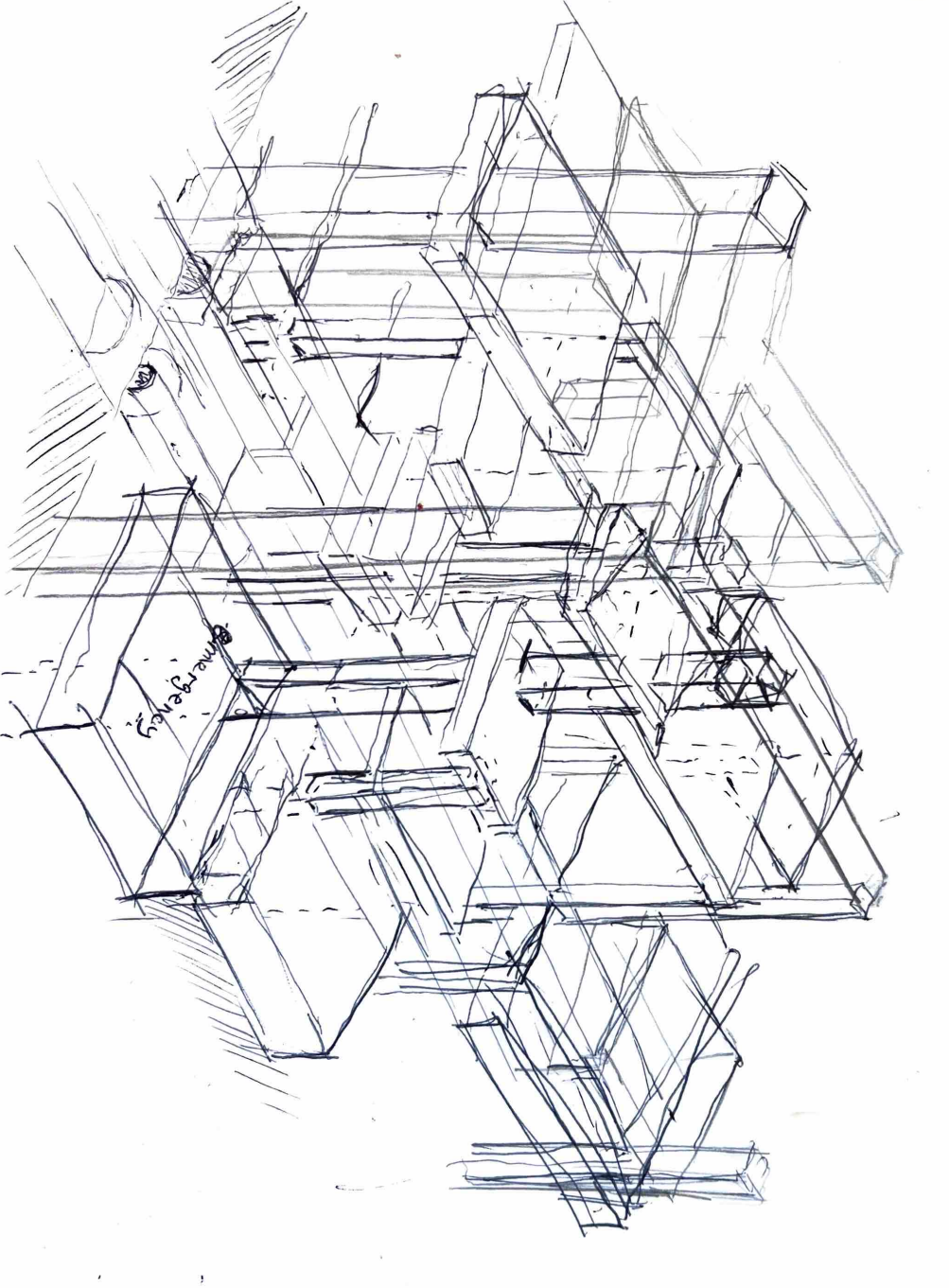
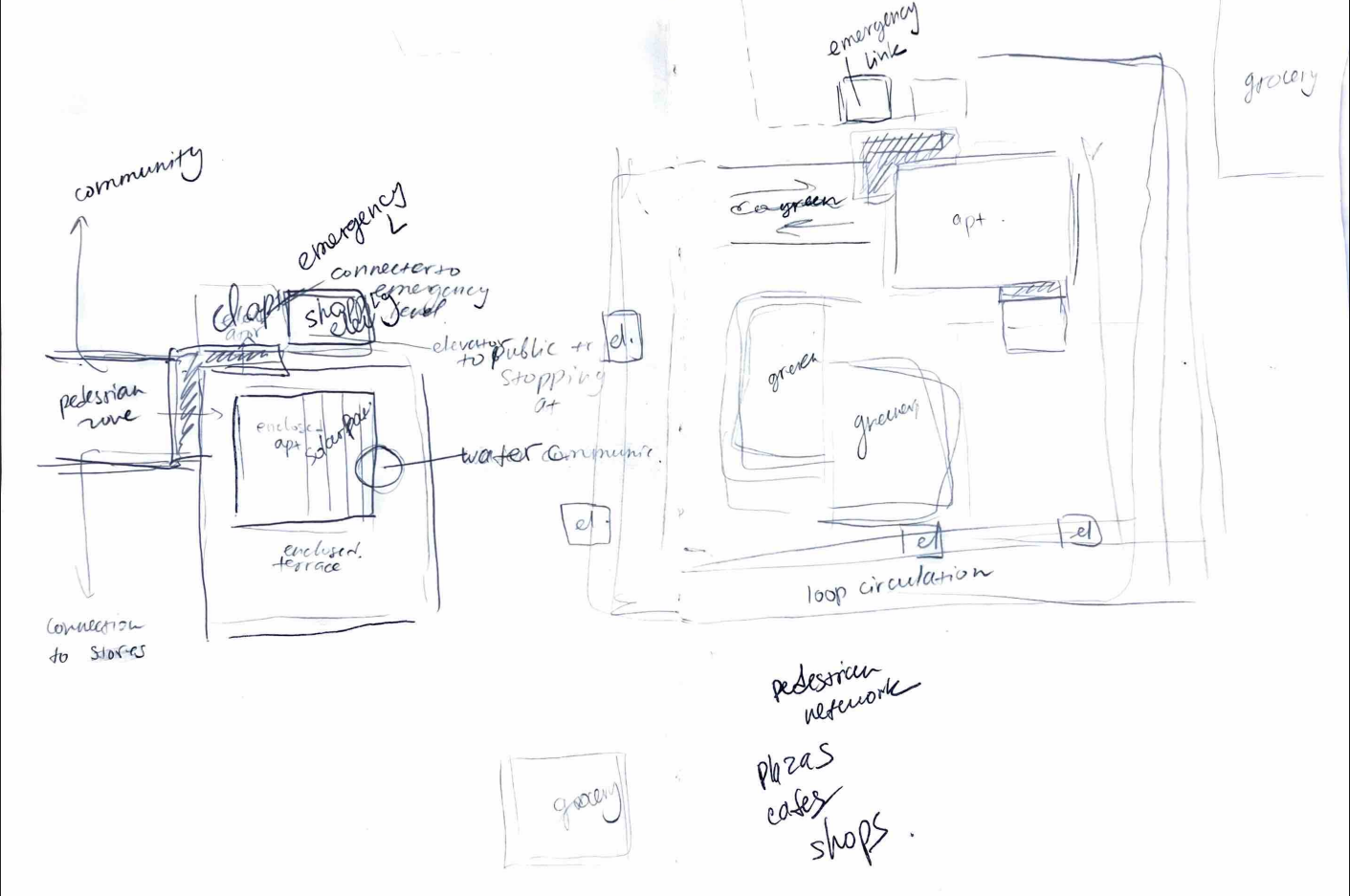
Research Diagram
Research results
The project began with research combining urban analysis and a questionnaire.
The questionnaire included 43 questions across seven topics, including:
Most respondents lived in large metropolitan cities and over 60% had lived there for more than ten years, meaning their answers reflect long-term urban experience.
One of the clearest findings was related to urban overcrowding.
Participants rated:
This suggests that transportation and circulation infrastructure are the main pressure points in cities.
Another important finding relates to movement and safety.
When asked whether pedestrian movement should be separated from vehicles:
83% of respondents answered yes.
People consistently identified several factors that make cities more comfortable:
These results strongly suggest that future cities should focus on layered movement systems rather than fully enclosed environments.
Designed for future conditions where outdoor environments may become unstable.
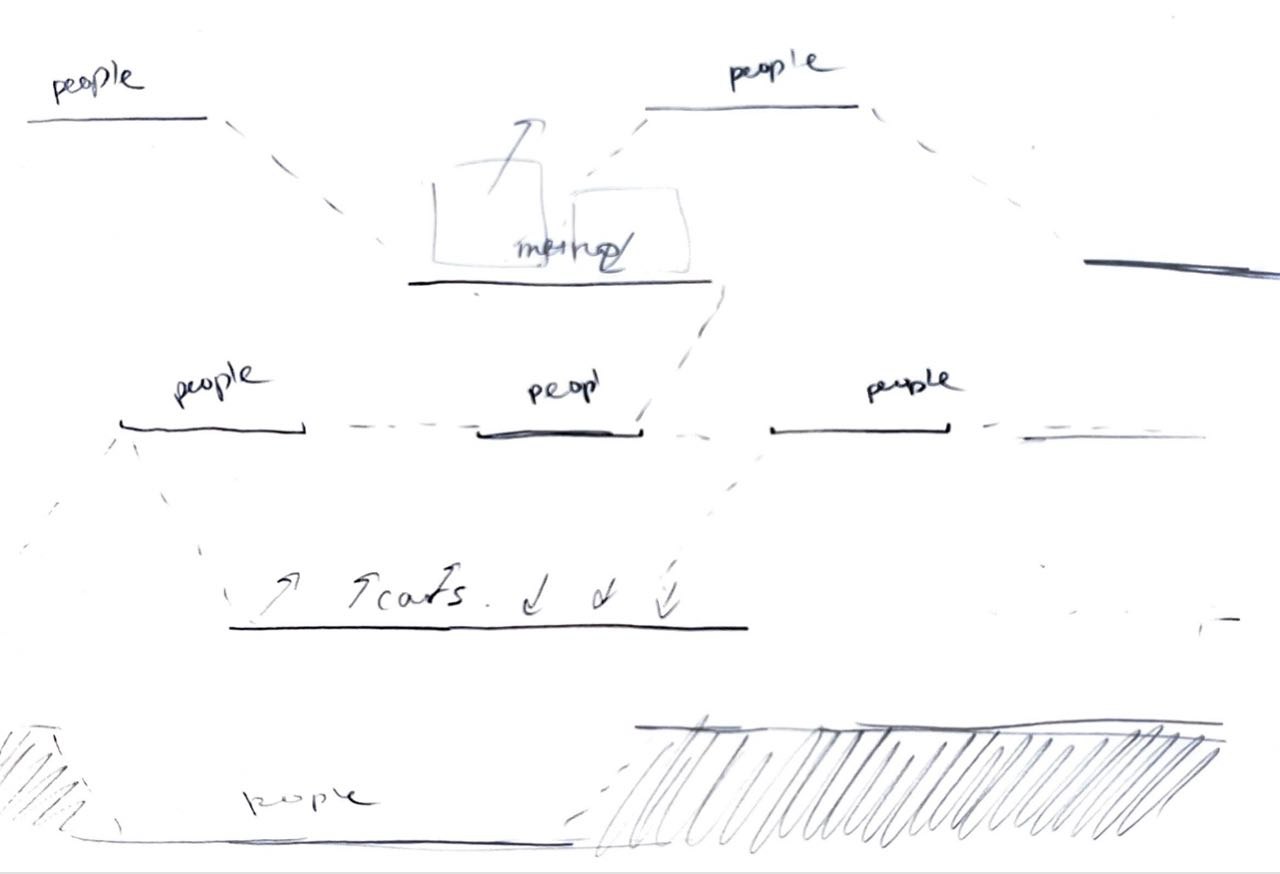
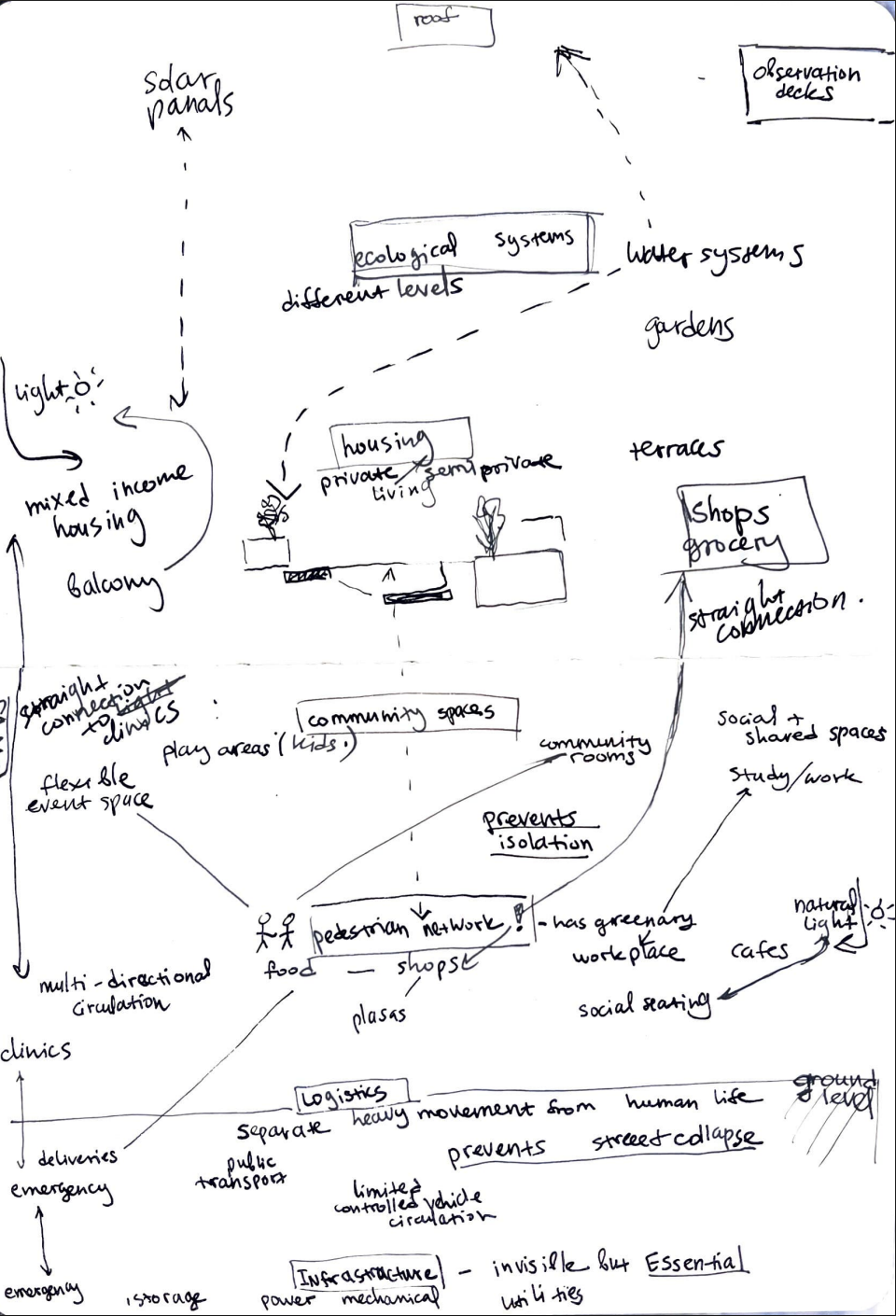
Urban functions are organized vertically to reduce congestion and improve efficiency.
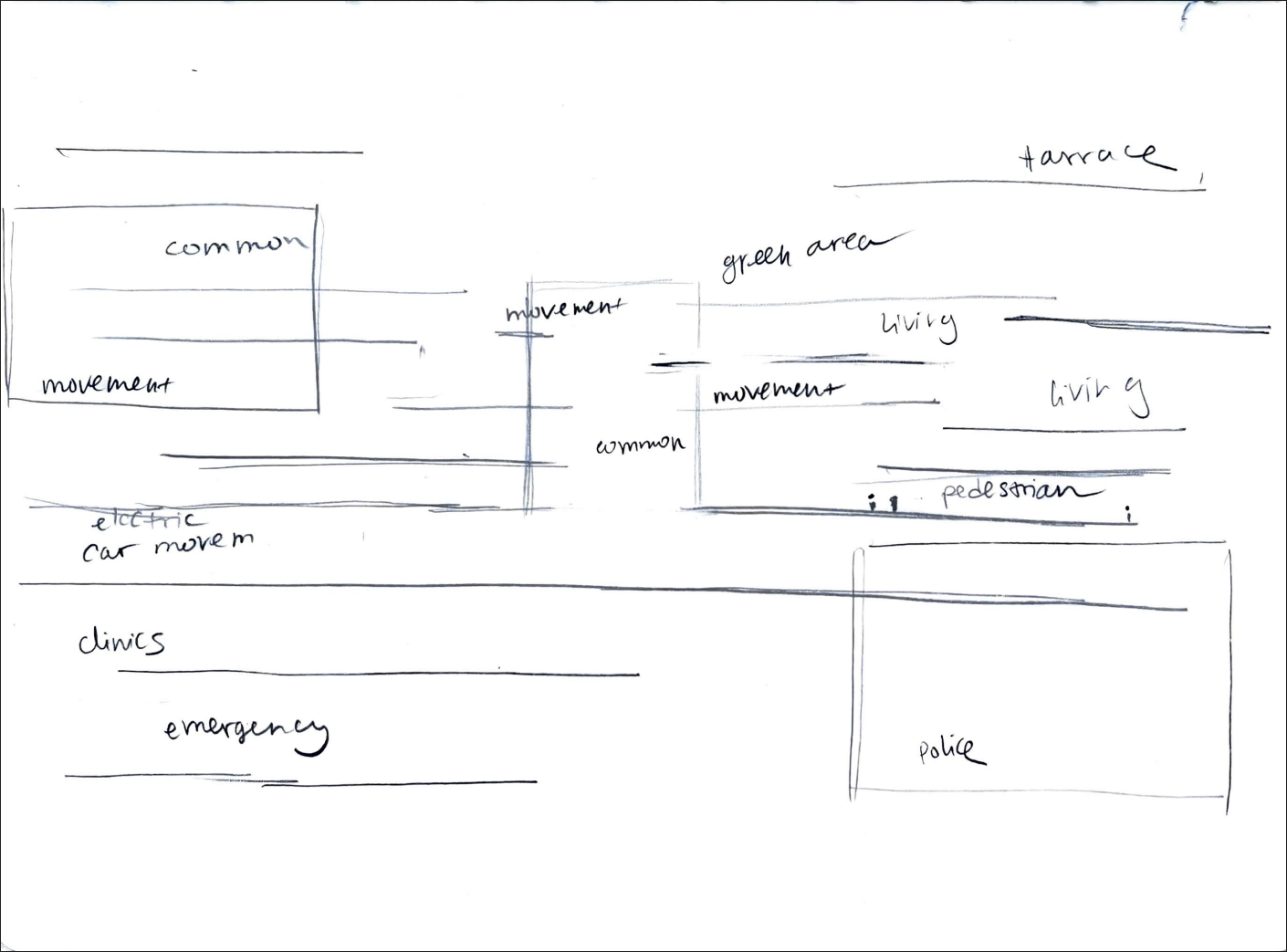
Pedestrians, vehicles, and services operate in different layers.
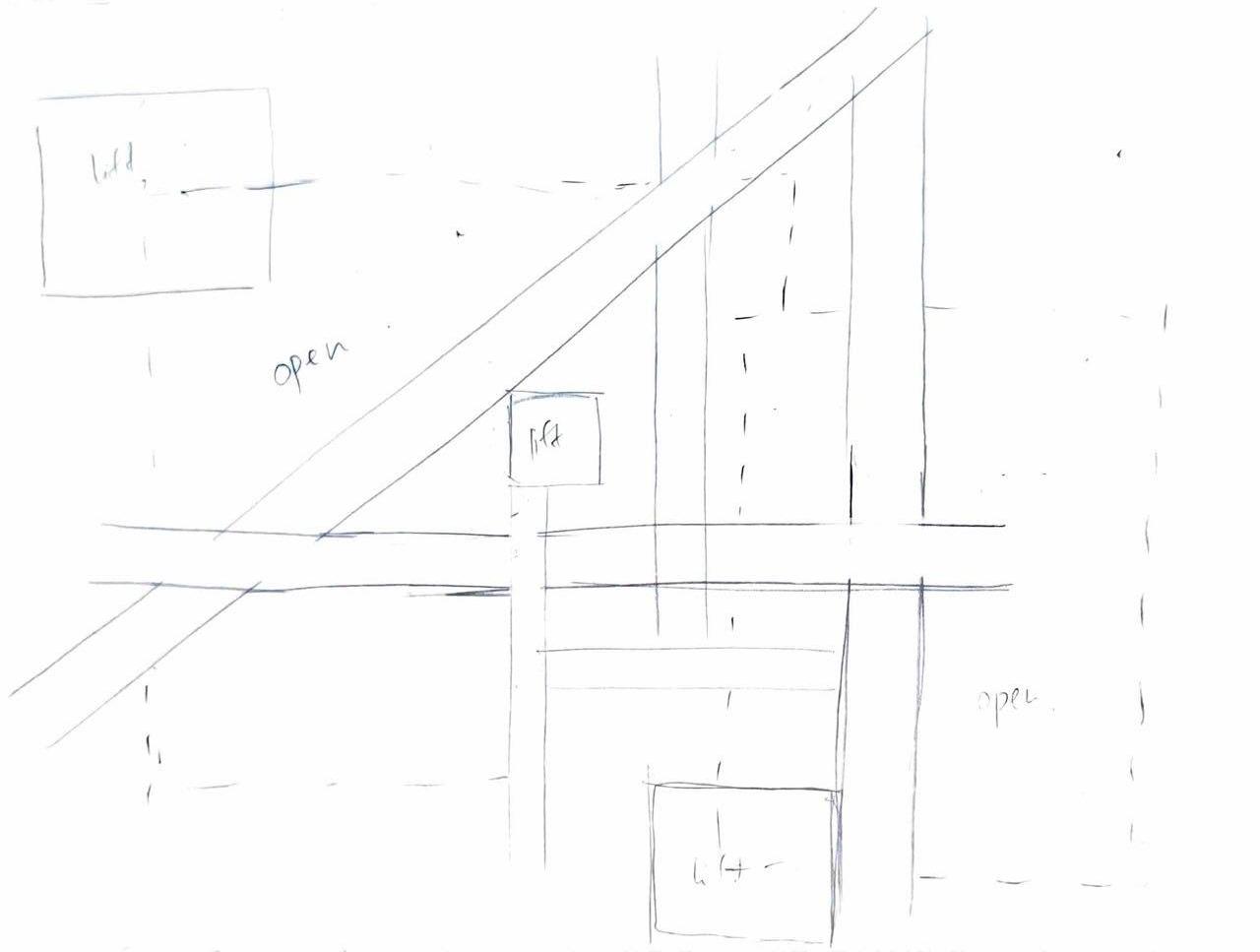
Multiple routes and loops prevent congestion and dead ends.
Elevators and connections link all layers and keep the system integrated.
Movement and public space prioritize pedestrian comfort and safety.
Housing is directly connected to services, circulation, and social spaces.
Green spaces improve air quality, light, and psychological comfort.
Atriums, terraces, and voids bring daylight and prevent enclosure.
Shared spaces support everyday interaction and community life.
The neighborhood can expand and evolve over time.